- Wed, Oct 2026
- |
- Moran’s Landscaping & Excavation LLC
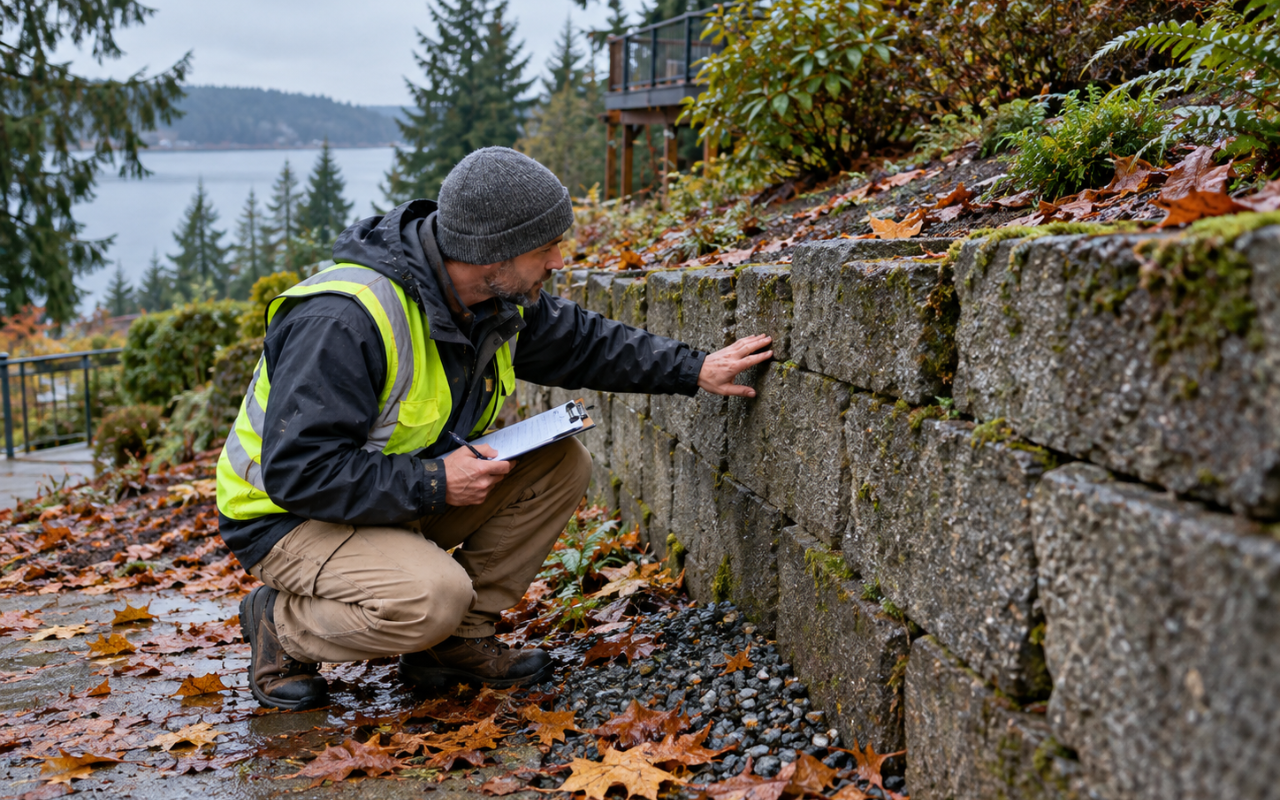
A retaining wall inspection before winter can help protect your yard, walkways, and outdoor areas. In Kitsap County, rain, cold weather, and wet soil can place extra pressure on retaining walls. Early checks make small changes easier to spot.
At Moran’s Landscaping & Excavation LLC, we look for visible changes that may affect wall stability. These can include soil movement around walls, blocked drains, cracks, or early leaning wall signs. A careful inspection can help you plan repairs before winter conditions worsen.
Winter Weather Can Stress Retaining Wall Systems
Wet soil becomes heavier, and cold temperatures can move the ground. As a result, walls may face more pressure. Water may also collect behind the wall. That added force can lead to cracking, leaning, or shifting over time.
Therefore, a retaining wall inspection before winter gives you a chance to check problem areas. Our retaining wall services across Kitsap County can also help you understand which signs deserve closer attention before seasonal weather changes.
Common Warning Signs That Need Early Attention Now
Small changes can be easy to miss. However, early leaning wall signs may point to growing pressure behind the structure. Cracks, loose blocks, uneven caps, or new gaps near the wall can also show that movement is taking place.
- Check for new cracks or wider old cracks.
- Look for bulges, leaning, or uneven sections.
- Watch for loose stones or blocks.
- Notice gaps between the wall and nearby soil.
At Moran’s Landscaping & Excavation LLC, we can help review these visible changes and explain practical next steps based on your wall’s condition.
How Soil Movement Can Affect Wall Stability Over Time
Soil movement around walls can change the amount of pressure placed on the structure. Heavy rain may wash soil away from the base, while wet ground behind the wall can become heavier. Both conditions may weaken support.
During a retaining wall inspection before winter, check for low spots, exposed roots, washed soil, or fresh gaps. These clues may show shifting ground. Our retaining wall support in Poulsbo explains more about local wall care and maintenance.
Drainage Checks Help Reduce Pressure Behind Walls In Winter
Good drainage is an important part of wall care. A drainage outlet inspection helps confirm that rainwater can leave the area instead of collecting behind the wall. Blocked outlets may increase pressure and erosion.
- Remove leaves, mud, and debris from outlets.
- Check that water flows away from the wall.
- Look for standing water after heavy rain.
- Make sure nearby downspouts do not drain toward the wall.
Our guide to drainage stone options for retaining walls can help you understand how suitable materials support water flow and reduce unwanted moisture.
Simple Home Checks Before Cold Weather Arrives Each Year
You can complete a basic retaining wall inspection before winter by viewing the wall from several angles. Compare it with nearby straight lines, such as a fence edge. This makes small changes easier to notice.
- Use a level to check for new leaning.
- Take photos to compare changes later.
- Check the base for erosion or gaps.
- Inspect after heavy rain when drainage issues are easier to see.
Small surface cracks may also need attention. Our minor retaining wall crack guidance covers common signs and useful repair considerations for homeowners.
Professional Inspection Can Reveal Hidden Wall Problems Early
Some wall problems are hard to judge from a quick check. A retaining wall inspection service in Kitsap County can provide a closer review of alignment, drainage, soil conditions, and visible damage. This is useful when the wall has changed since last winter.
At Moran’s Landscaping & Excavation LLC, we can review the condition of your wall and explain which issues may need attention first. A retaining wall inspection before winter can help you plan repairs before wet weather adds pressure.
Frequently Asked Questions
When should I inspect my retaining wall?
Early fall is a good time because it allows repairs before freezing weather and long rain periods arrive. Checking after major storms can also help reveal new changes.
What are common early leaning wall signs?
Look for a visible tilt, bulging sections, widening gaps, or caps that no longer sit level along the top of the wall.
Why is drainage outlet inspection important?
It confirms that water can leave freely. Poor drainage may add pressure and increase erosion around the structure and nearby soil.
Can small cracks become worse during winter?
Yes. Water can enter cracks, and cold conditions may worsen damage. Early repairs can reduce that risk and help protect the surrounding wall area.
When should I call a professional?
Contact a professional if you see strong leaning, large cracks, loose sections, ongoing erosion, or water collecting behind the wall.
Plan For A Safer Winter Landscape
A retaining wall inspection before winter is a simple step toward a safer outdoor space. By checking drainage, soil changes, cracks, and alignment early, you can respond before winter adds stress.
At Moran’s Landscaping & Excavation LLC, we can help you review concerns and choose a practical next step. For local support, talk with our team about your retaining wall before colder, wetter conditions arrive.