- Thu, Sep 2026
- |
- Moran’s Landscaping & Excavation LLC
Retaining wall drainage stone options matter because trapped water can push hard against a wall. The right stone helps water move away, protects the structure, and lowers the chance of cracks or movement.
At Moran’s Landscaping & Excavation LLC, we look at soil, wall height, and water flow before choosing materials. Good drainage supports long wall life. Selecting retaining wall drainage stone options early also makes planning easier.
Proper Drainage Protects Your Retaining Wall Structure
Water collecting behind a wall creates pressure that can cause bulging, cracking, or failure. Good drainage gives that water a clear path away from the wall. As a result, soil stays stable and the wall faces less force.
Using retaining wall drainage stone options also supports wall pressure control during wet seasons. Clean stone can guide water toward a drainpipe or outlet. For local project guidance, see our retaining wall services in Bainbridge Island.
Common Stone Types Used Behind Retaining Walls Safely
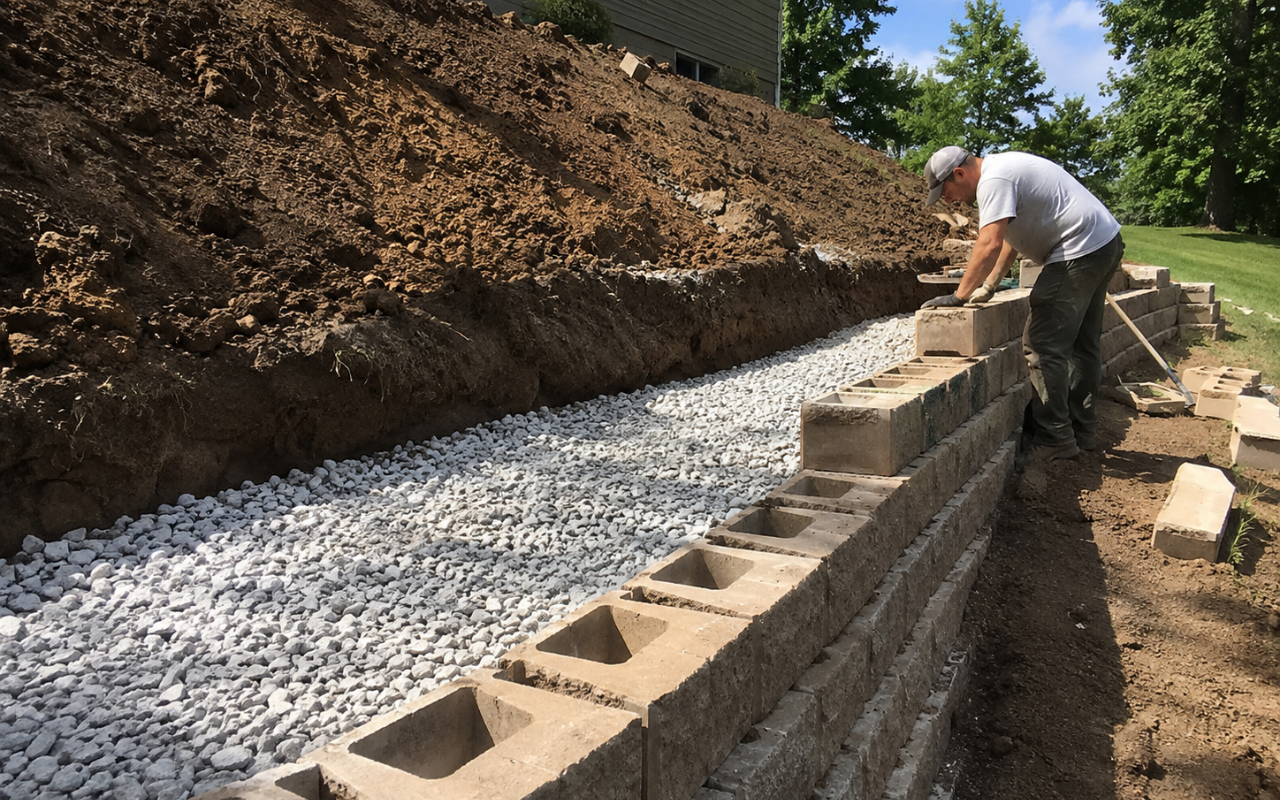
Different stone types can work well, but each site has its own needs. Drainage gravel behind walls should allow water to pass without holding too much fine soil. Clean, washed stone is practical because it drains well.
- Washed gravel supports steady water movement with fewer fine particles.
- Crushed stone gives good drainage and can lock together for support.
- Clean angular rock can work well for taller or heavier wall systems.
Stone Size And Shape Affect Drainage Performance Over Time
Stone size affects how quickly water can move through the backfill. Small stone may compact too tightly, while very large rock can leave uneven spaces. Clean medium-sized stone often balances drainage and support.
Shape matters too. Rounded gravel moves easily during placement, while angular stone can fit together more firmly. When reviewing retaining wall drainage stone options, we consider both water flow and how the material will sit behind the wall.
Backfill Materials That Support Better Water Movement Behind Walls
Backfill material choices should support drainage without adding extra pressure. Clean gravel or crushed rock often performs better than soil with high clay content. Fine soil can hold water and may slowly enter the stone layer, which can reduce drainage.
- Use clean stone with limited dust or fine material.
- Place filter fabric between native soil and drainage stone when suitable.
- Keep the drainage zone connected to a clear water outlet.
Our guide to choosing retaining wall materials explains other material factors that can affect the finished structure.
Site Conditions Guide The Right Drainage Stone Choice
Soil type, rainfall, slope, and wall height all affect material selection. Clay soil can hold more water, so it may require a stronger drainage setup. Sandy soil usually drains faster, but the wall still needs a safe path for water to leave.
At Moran’s Landscaping & Excavation LLC, we also review nearby grades and runoff before recommending retaining wall drainage stone options. Our retaining wall type guide can help you understand how wall design also shapes drainage needs.
Installation Steps That Help Drainage Work Correctly Long Term
Retaining wall drainage stone options still need a clear outlet to work well. Even the best stone cannot perform well if water has nowhere to go. A drainage pipe, proper slope, and clean outlet help move water away from the wall. Careful placement also reduces settling and blocked paths.
- Prepare a stable base and plan where water will exit.
- Place the drainpipe at the lower back side of the wall.
- Add clean drainage stone around and above the pipe.
- Separate soil from stone with suitable filter fabric when needed.
For area-specific support, review our retaining wall services in Gig Harbor.
Frequently Asked Questions
What stone works best behind a retaining wall?
Clean crushed stone or washed gravel often works well because water can pass through it easily. The best retaining wall drainage stone options depend on soil, wall height, and drainage design.
Why is drainage gravel behind walls important?
It creates open space for water to move toward a pipe or outlet. This helps reduce pressure and protects the wall during rainy periods.
Can soil be used instead of drainage stone?
Some soil may be used farther from the drainage zone, but fine or clay-heavy soil should not replace clean drainage stone directly behind the wall.
How does stone help with wall pressure control?
Stone allows water to move instead of collecting in the soil. Less trapped water means less pressure pushing against the wall.
When should I request retaining wall consultation?
Consultation is useful for tall walls, steep slopes, heavy runoff, difficult soil, or any project where drainage direction is unclear.
Plan Reliable Drainage Before Building Your Retaining Wall
Choosing retaining wall drainage stone options early can prevent major problems later. The right stone, backfill, pipe, and outlet work together to move water safely and protect the wall through changing weather.
With Moran’s Landscaping & Excavation LLC, you can get clear guidance based on your site conditions and wall goals. For a retaining wall consultation, talk with us about your drainage needs before construction begins.