
- Wed, Nov 2025
- |
- Moran's Landscaping & Excavation LLC
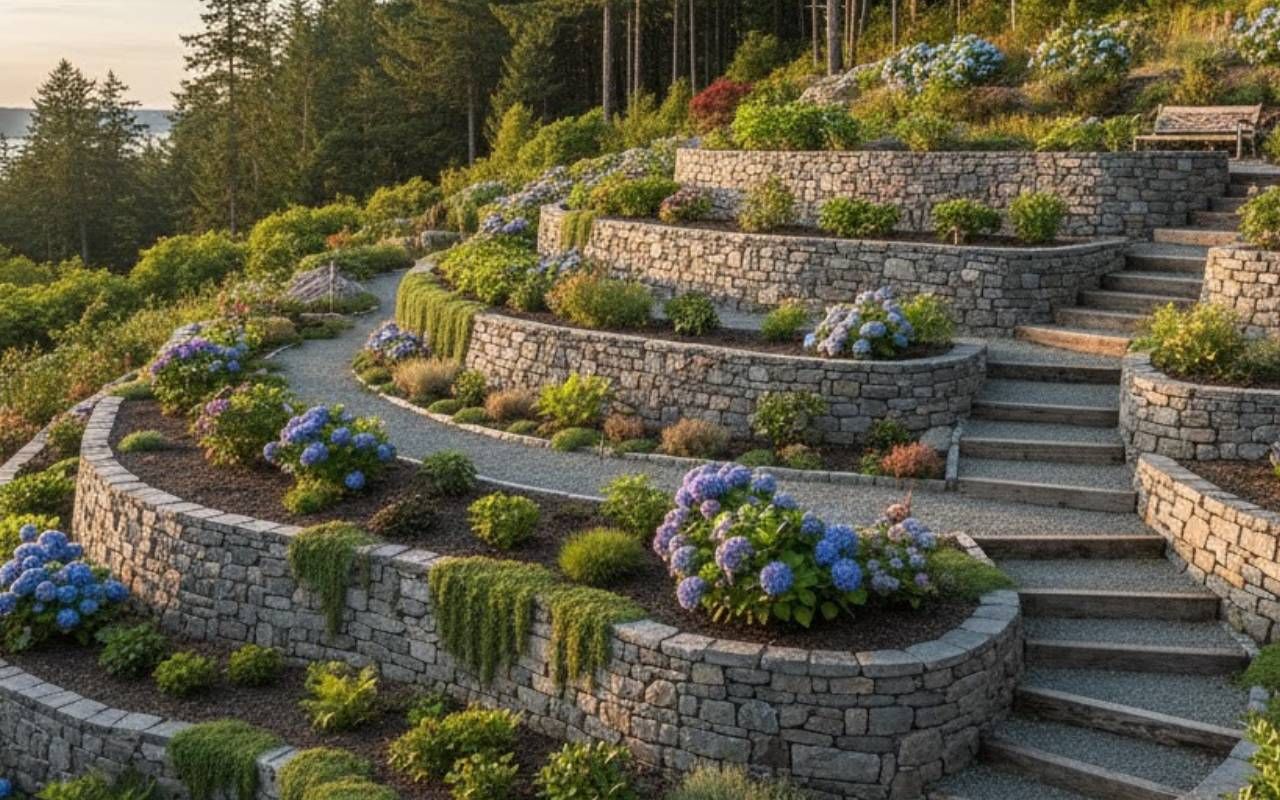
Picture your yard as a fresh canvas with real potential. However, slopes often waste space and strain designs. A Retaining Wall in Kitsap County solves grade issues, manages runoff, and adds structure. Moreover, it blends function and style for year-round enjoyment.
Therefore, the right wall controls erosion, improves drainage, and creates terraces. Additionally, smart planning around base, drainage, and finishes keeps the system stable. Finally, your outdoor area gains safety, usable space, and strong curb appeal.
Types of retaining walls for different landscapes
Walls vary by purpose, height, and site conditions. Consequently, matching type to terrain is essential.
- Gravity walls: simple builds for low heights with stone or blocks.
- Cantilever walls: footing and stem resist heavier loads.
- Anchored walls: rods add strength for tall or wet sites.
- Segmental block walls: modular units with many textures.
- Gabion walls: baskets of rock for rustic character.
- Timber crib walls: wood grids that suit woodland settings.
For deeper guidance, explore Different Types of Retaining Walls.
Benefits of installing a Retaining Wall in Kitsap County
Benefits reach beyond appearance. Instead, they deliver practical gains across the site.
- Erosion control that protects beds, paths, and foundations.
- New terraces for gardens, seating, and play zones.
- Directed drainage that reduces pooling and saturation.
- Higher property value with cohesive design.
- Clear boundaries and fewer slip hazards on slopes.
Additionally, review our Retaining Wall Services for local solutions.
Factors to consider before building a wall
Thoughtful planning prevents surprises. Likewise, it keeps costs in check.
- Utilities, drainage paths, and local permits for taller walls.
- Soil behavior in rain and how water moves downslope.
- Desired height, geogrid needs, and safe access routes.
- Space for steps, lighting, and planting pockets.
Because sites differ, align design and safety to your Retaining Wall in Kitsap County from the start.
Designing your wall to complement the landscape
Material, color, and shape define the look. Moreover, curves soften lines, and tiers scale large areas.
Also, mix elements: stone caps on block, or metal accents on timber. Consequently, the wall feels crafted and unique.
Choosing the right backfill and drainage
Proper backfill protects structure. As a result, water pressure stays low and performance improves.
- Place coarse gravel or crushed stone behind the face.
- Keep fine soils farther from the wall in outer zones.
- Add filter fabric to separate soil from drainage rock.
- Install perforated pipe to carry water away safely.
This section covers Backfill materials and compaction in simple terms to guide smart choices.
Importance of proper compaction techniques
Compaction limits settling and uneven pressure. Therefore, lift in thin layers and set each pass firmly.
Use a plate compactor or hand tamper. Additionally, monitor moisture, avoid over-thick lifts, and keep the surface level for consistency.
Enhancing aesthetics with decorative elements
Veneers, textured blocks, and contrasting caps add depth. Furthermore, lighting reveals textures after dark and boosts safety.
Likewise, vines and shrubs soften edges. Consequently, the wall becomes a living feature with seasonal interest.
Maintenance tips to extend lifespan
Small checks prevent big repairs. Hence, schedule quick inspections after storms.
- Clear debris to keep drains open and free-flowing.
- Seal minor cracks with exterior-grade products.
- Refresh joint sand or mortar where gaps appear.
- Wash surfaces to remove moss and dirt buildup.
- Protect timber with water-resistant finishes.
Hiring a professional in Kitsap County
Experienced crews read soils and weather patterns. Moreover, they secure permits and follow codes.
Additionally, pros install drains, geogrids, and backfill to standards. Therefore, your Retaining Wall in Kitsap County gains durability and a reliable warranty.
For railroad tie options, see Railroad Ties Retaining Walls and our guide, How to Build a Retaining Wall with Railroad Ties.
Frequently Asked Questions
How tall can my wall be without a permit?
Local rules vary. However, many areas require permits above four feet. Therefore, check county codes first.
What base should I use under the wall?
Use compacted crushed rock for strength and drainage. Moreover, create a level, frost-resistant platform.
Do I need geogrid in my wall?
It depends on height, load, and soil. Consequently, taller or loaded walls often require geogrid layers.
How do I prevent water pressure buildup?
Install gravel backfill, filter fabric, and a drain pipe. Additionally, slope outlets away from structures.
Which materials last the longest?
Engineered blocks and stone resist decay. Likewise, treated timbers help, yet masonry usually outlasts wood.
Transform your landscape today
A Retaining Wall in Kitsap County adds space, safety, and style. Additionally, good planning, drainage, and compacted layers deliver long-term performance. Finally, the right finish turns structure into a focal point.
Contact Moran’s Landscaping LLC
Ready to start your Retaining Wall in Kitsap County project? Moreover, our team can help from design to build. Contact us for a friendly consultation.