
- Sun, Jul 2026
- |
- Moran’s Landscaping & Excavation LLC
Retaining wall installation can make a sloped or uneven yard safer, cleaner, and easier to enjoy. With simple planning, the right materials, and steady building steps, your outdoor space can gain better shape and long-term support.
At Moran’s Landscaping & Excavation LLC, we guide homeowners through clear choices before work begins. Therefore, you can understand drainage, strength, design, and timing without feeling lost during the project.
Smart Planning Keeps Your Retaining Wall Project Simple
Good planning helps your wall look better and last longer. First, look at the slope, soil, water flow, and nearby outdoor features. These details help decide the best height, layout, and support needs.
Also, a clear plan can prevent extra work later. For more help with wall planning, visit our retaining wall service guide and review how a proper project starts.
Wall Material Options That Match Your Yard Goals
Choosing wall material options is an important part of retaining wall installation. Each material gives a different look, strength level, and care need. As a result, the best choice depends on your yard and your design goals.
- Concrete blocks work well for clean lines and steady support.
- Natural stone gives a classic look with strong curb appeal.
- Timber can suit smaller walls with a warm, rustic style.
- Gabion walls may help where heavier support is needed.
For a deeper look at material choices, review our material selection guide. With Moran’s Landscaping & Excavation LLC, you get practical guidance based on your space, not a one-size-fits-all answer.
Good Drainage Protects Your Wall From Soil Pressure
Retaining wall drainage planning is not just about moving water away. It also helps reduce pressure behind the wall. Without drainage, trapped water can push hard against the structure and cause future damage.
- Use gravel behind the wall to help water move.
- Add a drain pipe when the wall needs more water control.
- Use fabric to help keep soil from clogging the drain area.
- Keep outlets clear so water can leave the wall safely.
Because water can change how soil behaves, drainage should be part of the first plan. Therefore, retaining wall installation works best when support and water flow are designed together.
Strong Support Makes Sloped Yards More Useful
Sloped yard support can turn hard-to-use land into a cleaner and safer space. A strong wall can help hold soil in place, reduce washout, and create flatter areas for gardens, paths, or outdoor seating.
However, taller walls often need more care during planning. Some projects may need added reinforcement or expert review. Our team at Moran’s Landscaping & Excavation LLC helps customers understand safe next steps before building begins.
Site Preparation Sets The Base For Lasting Strength
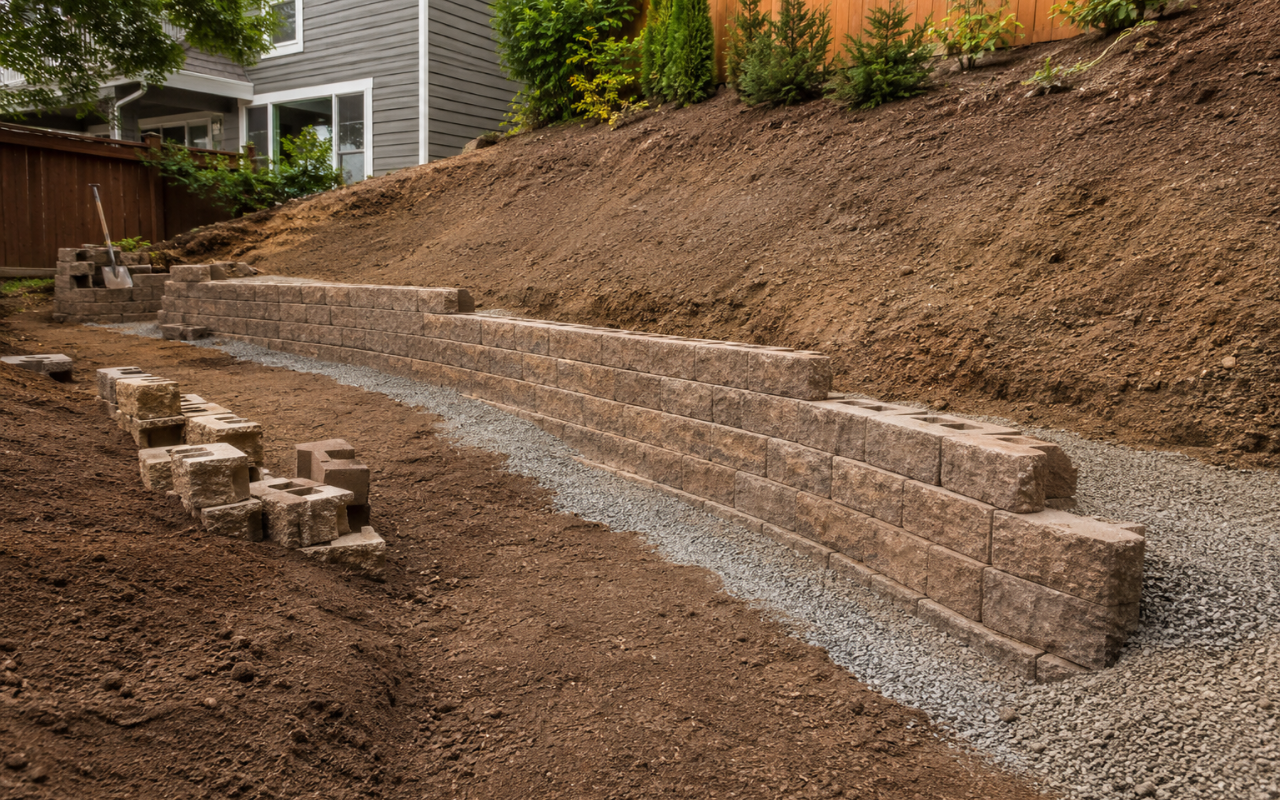
Every strong wall starts with a stable base. Clear the area, mark the wall line, and remove loose soil or plants. Then, dig the trench wide enough for the wall base and drainage space.
Next, add compacted gravel and check that the base stays level. This step is key because retaining wall installation depends on a firm first course. If the base shifts, the wall above it can shift too.
Safe Building Steps Help Your Wall Stay Straight
After the base is ready, place the first row with care. This row controls the rest of the wall. So, check each block or stone often and make small changes before adding more layers.
- Set the first course level from side to side.
- Stagger joints so the wall has fewer weak points.
- Backfill with gravel as the wall rises.
- Use reinforcement when the wall height or slope requires it.
If the work feels too heavy or complex, searching for a retaining wall contractor near me is a smart step. You can also compare styles in our guide to wall types.
Frequently Asked Questions
How long does a retaining wall usually last?
A well-built wall can last for many years when the base, drainage, and materials fit the yard. Regular checks also help catch small issues early.
Why is drainage so important behind the wall?
Drainage lowers water pressure behind the wall. As a result, the wall has a better chance of staying straight, stable, and safe during wet weather.
Can a retaining wall help with a sloped yard?
Yes, a wall can add sloped yard support and help control soil movement. It can also create more usable space for outdoor features.
What materials are best for retaining walls?
The best material depends on the yard, wall height, style, and soil. Concrete blocks, stone, timber, and gabion walls all have different benefits.
Should I hire a contractor for my wall?
Some small walls may be simple, but taller or load-bearing walls need more planning. For safer retaining wall installation, professional guidance can prevent costly mistakes.
Ready To Plan A Wall That Lasts Longer
Retaining wall installation can improve beauty, safety, and yard function when each step is done with care. From drainage to materials, every choice helps the wall handle soil and weather over time.
When customers contact Moran’s Landscaping & Excavation LLC, we explain the safest path for their yard. To discuss your project, check out our contact page for project guidance.