
- Tue, Sep 2026
- |
- Moran’s Landscaping & Excavation LLC
Retaining walls protect slopes and garden areas from shifting soil. However, age, water, and ground movement can weaken them. When cracks, leaning, or drainage problems appear, retaining wall replacement may be the safest way to protect your landscape and restore a stable look.
At Moran’s Landscaping & Excavation LLC, we review the full site before recommending the next step. We consider drainage, soil pressure, access, and nearby features. This helps us plan work that supports your yard and limits future problems.
Warning Signs That Your Retaining Wall Needs Attention
Wall damage can start small but grow quickly. Common failing wall warning signs include movement, cracks, and unwanted water. These problems may mean the wall is under unsafe pressure.
- Horizontal or widening cracks across the wall face
- Sections that bulge, bow, or lean outward
- Water seepage, pooling, or washed-out soil nearby
- Loose blocks, shifting caps, or uneven wall sections
Early action matters. Our guide to minor wall crack repair can help you see when damage may still be limited and when a larger evaluation makes sense.
Timely Wall Replacement Protects Your Property Better
Waiting can increase soil pressure and water buildup. A damaged wall may also affect patios, paths, fences, or planting areas. In some cases, retaining wall replacement can prevent a larger failure and reduce damage across the yard.
At Moran’s Landscaping & Excavation LLC, we focus on safe planning before work begins. We review the wall, slope, and drainage together. This helps us choose a practical solution instead of treating only visible damage.
Choosing Rebuild Materials That Match Your Landscape Needs
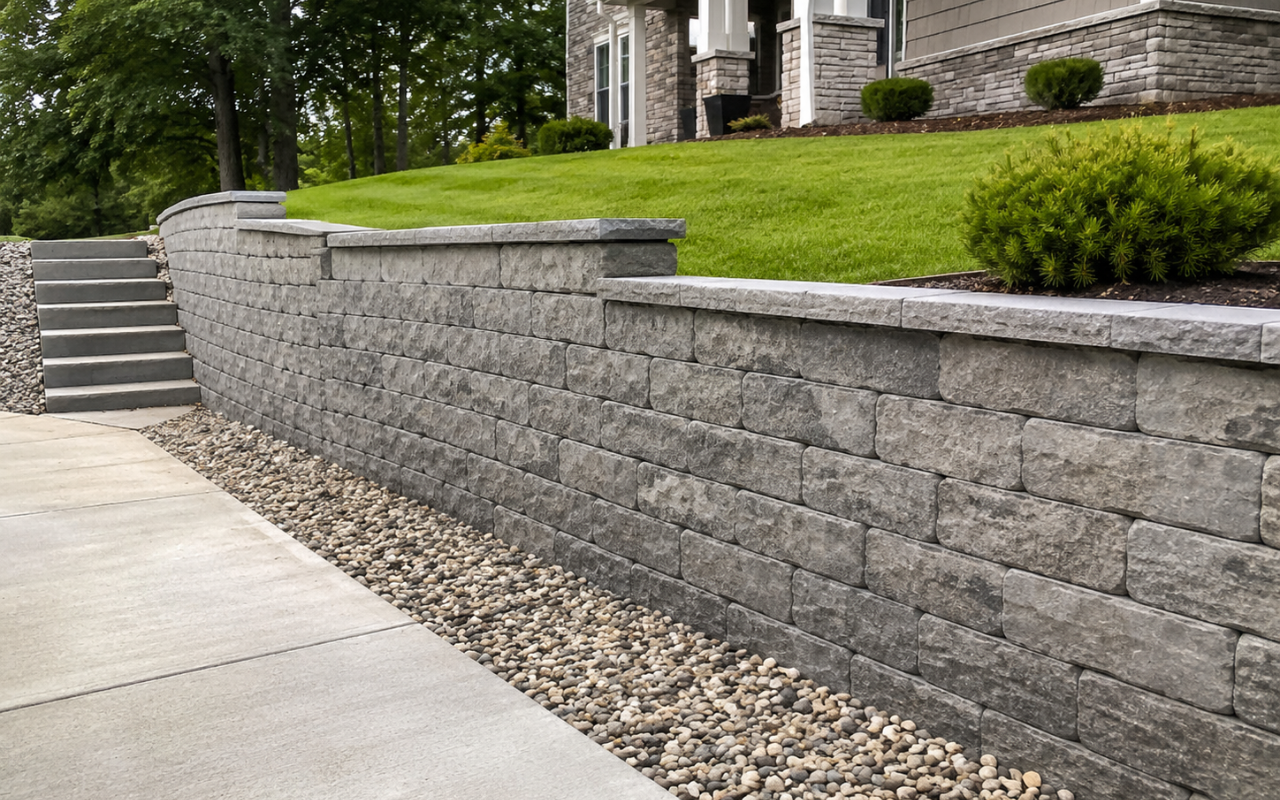
The right wall rebuild materials depend on wall height, soil, drainage, and the desired look. Concrete blocks, natural stone, timber, and other systems can all work in the right setting. Each option has different care needs and design benefits.
- Concrete blocks give a clean, even appearance
- Natural stone creates an organic landscape style
- Timber can suit smaller walls and rustic spaces
- Drain-friendly systems can help manage wet conditions
Review our retaining wall options and wall solutions in Kitsap County for practical design inspiration.
Planning Slope Support Before Rebuilding Your Retaining Wall
Slope stabilization planning starts with water control. Gravel backfill, drain pipe, and proper grading can help move water away from the wall. Soil type and slope angle also affect how much support the new structure may need.
Steeper areas may require deeper support, stronger reinforcement, or more than one wall level. A careful plan makes retaining wall replacement more reliable because it addresses the forces behind the wall, not only the visible structure.
Professional Wall Replacement Can Reduce Costly Installation Mistakes
Larger walls require careful excavation, base preparation, drainage, and alignment. Professional work can also help with local rules and site challenges.
- Site review before excavation starts
- Proper base and drainage preparation
- Material placement based on wall design
- Final grading that directs water correctly
Our Bainbridge Island wall services show how we approach projects with site conditions, access, and long-term function in mind.
Getting Clear Estimates Before Your Wall Project Begins
A retaining wall replacement quote should explain the main parts of the job. Ask what is included for excavation, materials, drainage, soil preparation, and cleanup. Clear details make it easier to compare options fairly.
At Moran’s Landscaping & Excavation LLC, we value clear communication from the start. Ask about the planned wall system, site preparation, and factors that could change the scope. You can contact us about your wall project to discuss the site.
Frequently Asked Questions
When should a damaged retaining wall be replaced?
A retaining wall replacement may be needed when the wall leans, bulges, has major cracks, or keeps showing drainage problems. The right choice depends on the damage, soil pressure, and overall wall condition.
Can drainage problems cause a retaining wall failure?
Yes. Water behind a wall adds pressure and can wash away supporting soil. Proper drainage is an important part of repair planning and new wall construction.
Which materials work best for rebuilding retaining walls?
The best choice depends on wall height, soil, drainage, appearance, and site access. Concrete blocks and natural stone are common, but every property needs its own review.
Do I need permits for a replacement wall?
Permit rules vary by location, wall height, and nearby structures. It is best to check local requirements before excavation or construction begins.
How do I prepare for a replacement estimate?
Note visible damage, drainage issues, wall size, and access limits. Photos can also make the first conversation more useful.
A Stronger Wall Can Refresh Your Entire Landscape
A new wall can improve drainage, define planting areas, protect nearby features, and give the yard a cleaner look. Thoughtful planning creates a better balance between safety and appearance.
When retaining wall replacement is needed, we focus on the whole landscape rather than one structure. At Moran’s Landscaping & Excavation LLC, our goal is a solution that fits the site, supports the slope, and helps your outdoor space feel secure and finished.