
- Mon, Apr 2026
- |
- Moran's Landscaping & Excavation LLC
Step into your yard and look at how it handled winter. If the grass looks thin, dull, or slow to wake up, spring is the right time to help it recover.
At Moran’s Landscaping & Excavation LLC, we help homeowners understand spring lawn fertilization in Kitsap County with simple steps that support stronger roots, greener color, and steady grass growth.
Spring Fertilization Builds Stronger Lawns
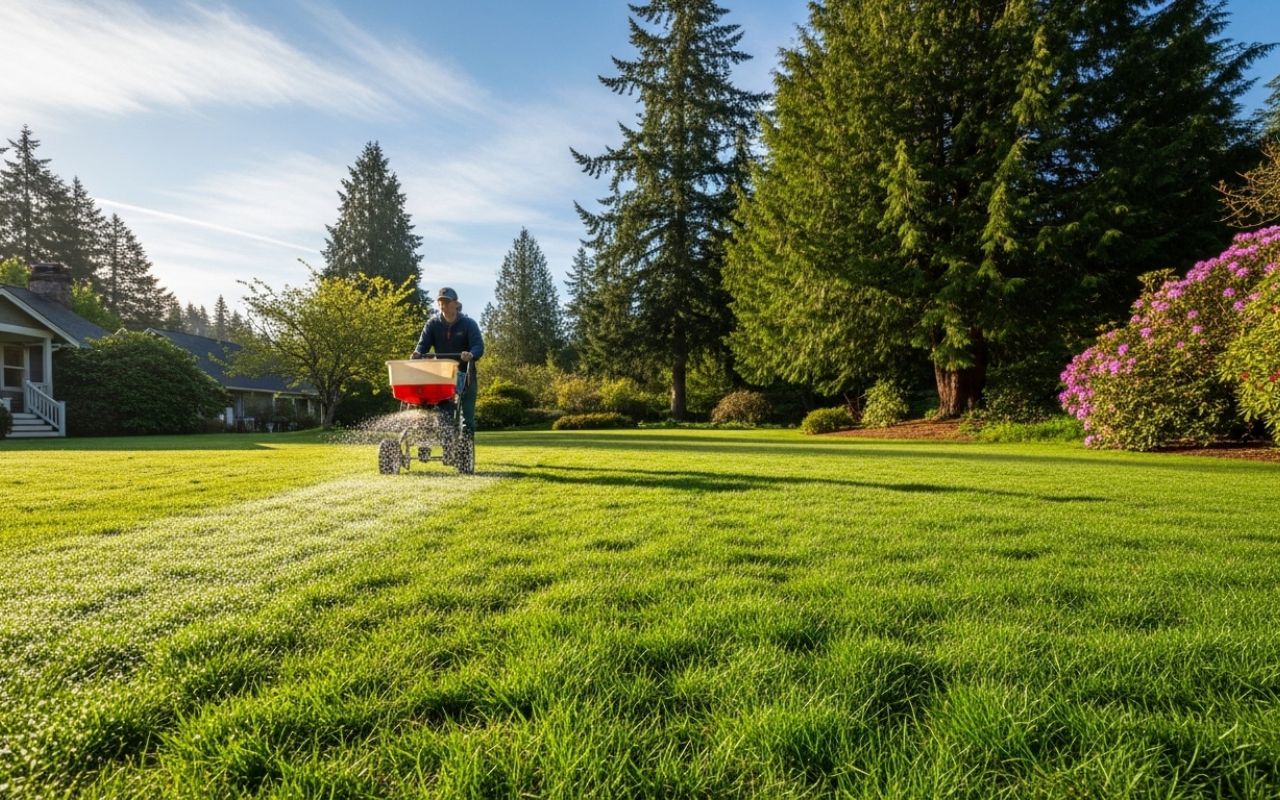
Spring lawn fertilization in Kitsap County helps your grass recover after cold, wet months. During winter, lawns often lose color, strength, and density. A proper spring feeding gives the soil the nutrients it needs to support fresh growth.
Healthy roots also help your lawn handle weeds, dry days, and foot traffic better. With Moran’s Landscaping & Excavation LLC, our goal is to help your yard grow stronger from the ground up, not just look green for a short time.
Know What Your Lawn Needs First
Every yard is different, so it helps to look closely before adding fertilizer. Soil type, drainage, shade, and past lawn problems can all change how your grass responds.
- Check for thin, yellow, or bare areas before feeding.
- Look for compacted soil where water sits too long.
- Notice shaded spots that grow slower than sunny areas.
- Test the soil when your lawn has repeated problems.
These simple checks make lawn care in Kitsap County more effective. They also help prevent overfeeding areas that may need aeration, seeding, or better watering instead.
How Should You Time Spring Feeding?
A good lawn fertilizer schedule depends on weather, soil moisture, and how actively your grass is growing. Fertilizing too early can waste nutrients during heavy rain. Waiting too long can leave your lawn weak during its best growth window.
Most lawns benefit from feeding when grass starts growing again and the soil is no longer too cold. For more seasonal help, visit our guide on winter lawn fertilizer and see how cool-season care connects with spring results.
Choose Fertilizer That Supports Local Growth
The right fertilizer should match your lawn’s needs and the local climate. In Kitsap County, spring rain can move nutrients away from the roots, so slow-release options often work well.
- Use nitrogen to support green leaf growth.
- Choose slow-release blends to reduce runoff.
- Consider organic options to improve soil over time.
- Avoid heavy applications that can burn grass blades.
Moran’s Landscaping & Excavation LLC focuses on practical choices that support healthy lawns without forcing fast, weak growth. For more support, explore our lawn care services in Kitsap County.
Prepare Your Yard Before Applying Fertilizer
Good preparation helps fertilizer reach the soil instead of sitting on leaves, sticks, or thatch. Clear debris first so nutrients can move down where roots can use them.
It also helps to fix bare spots, level small low areas, and water lightly before feeding. Moist soil helps fertilizer break down evenly. However, avoid applying it to soaked ground because nutrients can wash away.
Smarter Watering and Follow-Up Care
Watering after spring feeding helps nutrients move into the root zone. The goal is steady moisture, not soggy soil. Too much water can weaken roots and wash away fertilizer.
- Water lightly after feeding if rain is not expected soon.
- Reduce watering when the soil still feels damp below the surface.
- Mow at a healthy height to shade out weeds.
- Watch grass color and growth each week.
Strong follow-up care supports better grass growth through late spring and early summer. You can also read our healthy lawn care tips to keep your yard improving.
Frequently Asked Questions
When should I start spring lawn fertilization in Kitsap County?
Start when your grass is actively growing and the soil is no longer too cold or too wet. This helps the roots use the nutrients more effectively.
How often should I follow a lawn fertilizer schedule?
Most lawns do well with planned feeding in spring and another light boost later, depending on grass health, weather, and soil needs.
Can fertilizer fix bare patches in my lawn?
Fertilizer can support new growth, but bare patches may also need soil repair, seed, and better watering to fill in well.
Is spring feeding enough for the whole year?
Spring feeding is important, but your lawn still needs seasonal care. Summer watering, mowing, and soil support also matter for long-term health.
Can Moran’s Landscaping & Excavation LLC help with lawn care in Kitsap County?
Yes. We help homeowners choose the right care plan for their yard, including feeding, mowing support, and seasonal lawn care in Kitsap County.
Build a Greener Yard This Season
Spring is one of the best times to give your lawn a fresh start. With the right fertilizer, steady watering, and regular checks, your yard can become greener, thicker, and easier to enjoy.
Moran’s Landscaping & Excavation LLC is here to help you care for your outdoor space with simple, local guidance. For next-season planning, read our summer lawn care tips or reach out through our lawn care service page.