
- Sat, Jun 2025
- |
- Moran’s Landscaping & Excavation LLC
Flagstone is a popular choice for patios, walkways, and garden features because of its natural appearance and textured finish. But many homeowners ask: Should I seal it? Understanding the pros and cons of sealing flagstone can help you make the right call for your landscape.
At Moran’s Landscaping & Excavation LLC, we’ve designed and installed flagstone patios and walkways across Kitsap County. Here’s what to know before deciding to seal—or not seal—your flagstone surfaces.
Why Flagstone Is a Favorite for Outdoor Projects
Natural, slip-resistant, and uniquely patterned, flagstone blends beautifully into any landscape. It works well for patios, walkways, and garden accents because of its durability and versatility. If you’re new to this material, learn more in our what is flagstone guide.
Flagstone also pairs well with other materials, which is why many homeowners compare flagstone vs pavers for landscaping. Pavers offer uniformity and ease of installation, while flagstone delivers a more organic and custom look.
The Benefits of Sealing Flagstone
Longer Surface Protection
Sealing helps guard against stains, water damage, and fading from UV exposure. This is especially helpful in shaded or damp areas, where mildew can form on unsealed surfaces.
Enhanced Appearance
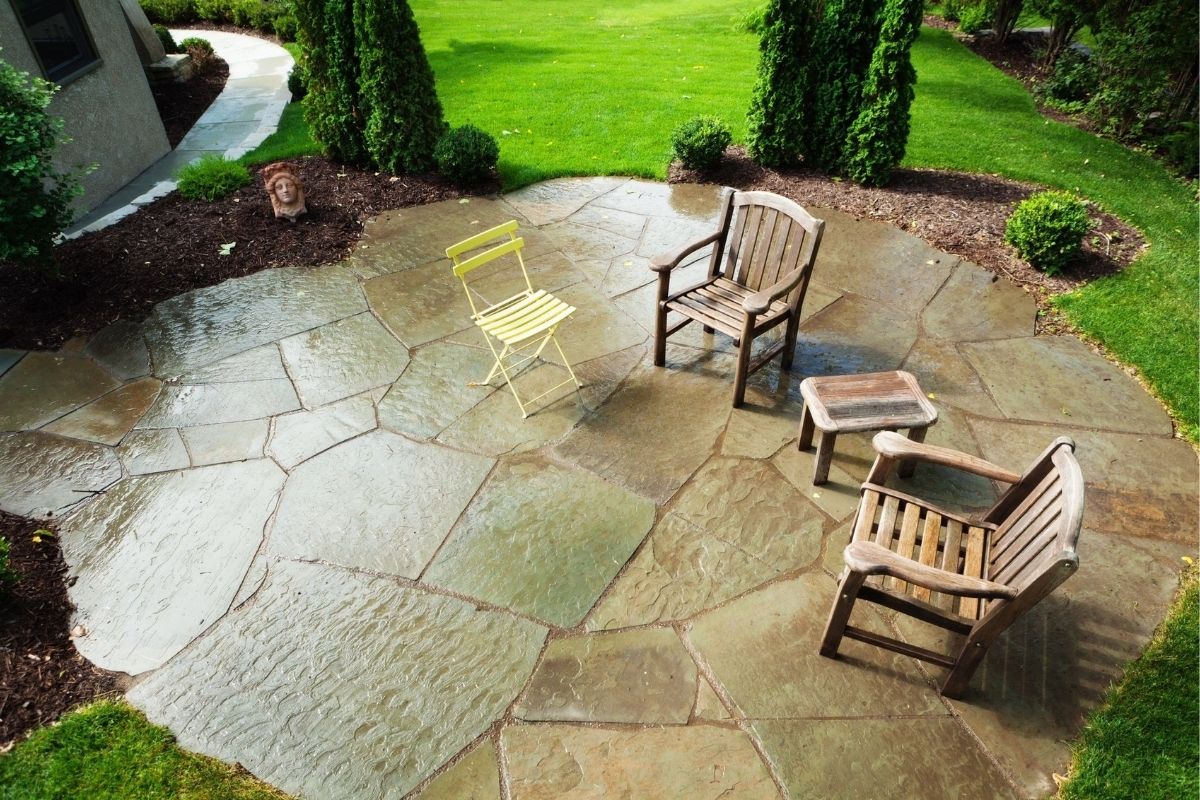
Sealants can bring out the natural color and texture of the stone. A wet-look or color-enhancing sealer adds richness and depth that many homeowners find visually appealing.
Easier Cleaning and Maintenance
Sealed flagstone repels dirt, debris, and liquids more effectively. This makes it easier to clean and less prone to staining from outdoor use.
The Drawbacks of Sealing Flagstone
It Changes the Look
Not everyone likes the appearance of sealed flagstone. Sealants can make surfaces look shinier or darker than expected. If you prefer a weathered or matte finish, you might choose to skip sealing.
Requires Maintenance
Sealants don’t last forever. Depending on foot traffic and exposure to the elements, resealing may be needed every 1–3 years. Without regular upkeep, the surface may start to peel or fade unevenly.
Extra Cost
Sealing adds to the overall project cost, especially when done by professionals. If you’re working on a tight budget, consider reviewing our cheap backyard landscaping ideas for ways to save on materials and design.
Should You Seal Your Flagstone Patio?
There’s no one-size-fits-all answer. Here’s a quick breakdown of when sealing may—or may not—be right for your project:
- Seal if your flagstone is in a high-traffic area or is exposed to moisture, grease, or heavy staining
- Skip sealing if you prefer a rustic, natural, weathered look and don’t mind more frequent maintenance
If you’re unsure which route to take, our flagstone patio design experts in Kitsap County can assess your landscape and guide you.
FAQs About Sealing Flagstone
How long does a flagstone sealer last?
Most sealers last 1–3 years depending on exposure and traffic. Resealing is recommended to maintain appearance and protection.
Can I seal flagstone myself?
Yes, but results can vary. Professionals ensure even application, proper surface prep, and the right product for your stone type.
What if I decide not to seal my flagstone?
You can leave flagstone unsealed, but expect more fading, weathering, and surface buildup over time. It will still remain functional and natural-looking.
Plan the Right Finish for Your Flagstone Project
Understanding the pros and cons of sealing flagstone helps you get the look and longevity you want from your outdoor surfaces. Whether you choose to seal or not, Moran’s Landscaping & Excavation LLC can help you design and install beautiful, durable patios and walkways that enhance your outdoor living space.
Contact us today to discuss your flagstone project and get expert recommendations tailored to your yard and goals.