
- Tue, Jun 2026
- |
- Moran’s Landscaping & Excavation LLC
Drip irrigation for flower beds in Kitsap County helps your garden stay bright while using water with care. In our mild local climate, flowers can grow well, but they still need steady moisture at the roots.
At Moran’s Landscaping & Excavation LLC, we plan simple watering setups that match each bed, soil type, and plant need. As a result, your flowers get support without waste, puddles, or dry spots.
Choose A System That Fits Your Garden Beds
A good system starts with the shape and size of your beds. Small raised beds may need a simple kit, while larger beds often need a longer drip line that can follow curves and corners.
Also, water efficiency improves when each part works well together. Filters, pressure parts, and steady tubing help keep the flow even. For more guidance, visit our guide on common irrigation system options.
- Use adjustable emitters for mixed flower types.
- Choose strong tubing that resists sun damage.
- Add a filter to lower the risk of clogs.
Build Simple Irrigation Zones Around Plant Needs First
Irrigation zones help you water plants based on what they actually need. For example, annual flowers may need more water than mature perennials, so they should not always share the same zone.
With Moran’s Landscaping & Excavation LLC, we look at sun, shade, slope, and soil before setting zones. This makes flower bed watering easier and helps each area receive the right amount of moisture.
- Group flowers with similar water needs together.
- Separate sunny beds from shaded areas.
- Keep dry-loving plants away from thirsty blooms.
Match Flower Bed Watering To Local Plant Growth
Drip irrigation for flower beds in Kitsap County should change as plants grow. New flowers often need more frequent watering, while established roots can usually handle longer breaks between watering days.
Therefore, a fixed schedule is not always best. Watch leaves, blooms, and soil moisture during the season. Then, adjust run times so your beds stay healthy without soaking the ground too much.
Place Each Drip Line With Care And Balance
The drip line should sit close enough to the root area without crowding plant stems. In many flower beds, even spacing helps water spread well and lowers the chance of dry pockets.
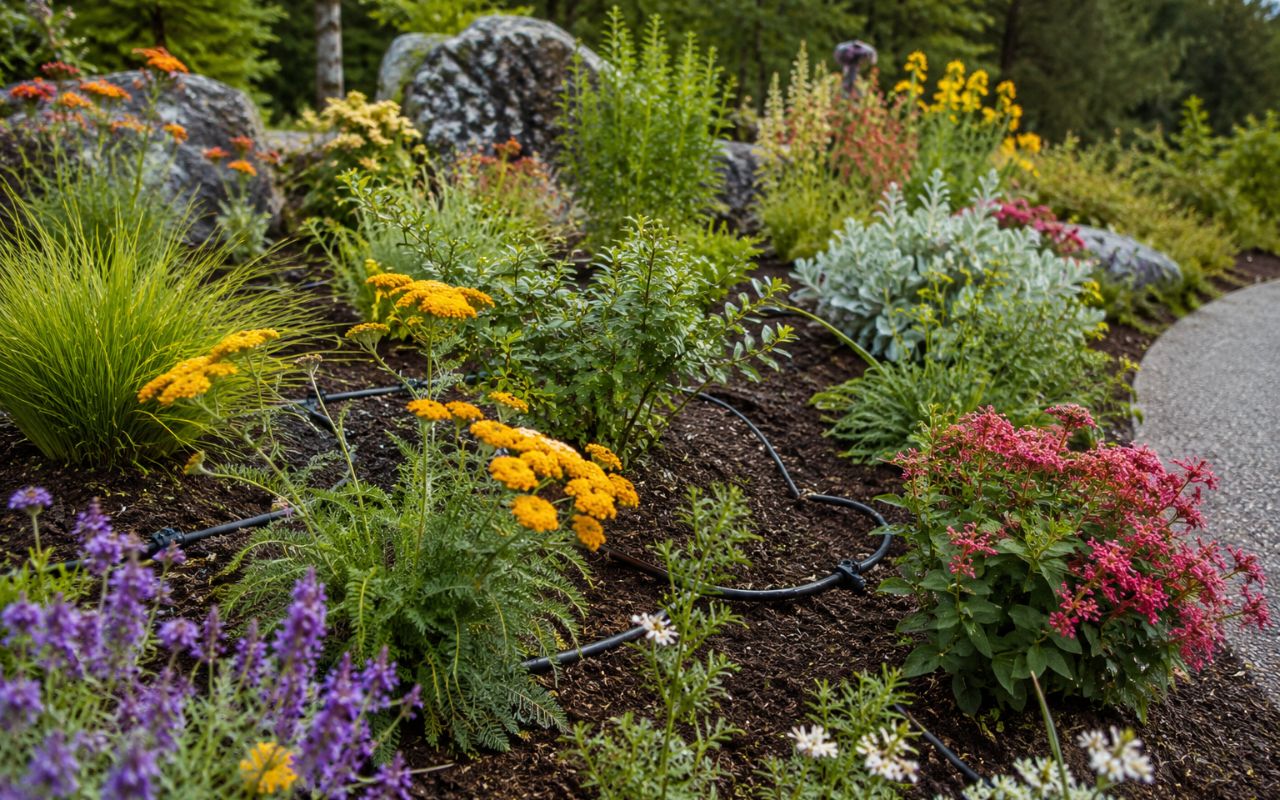
After placing the line, test the system for a few minutes. Then, check for leaks, weak flow, and puddles. A thin mulch layer can protect tubing while still letting water reach the soil.
Use Timers And Mulch For Better Water Savings
Timers make drip irrigation for flower beds in Kitsap County easier to manage. Early morning watering is often best because less water is lost to heat, and roots have time to absorb moisture.
Mulch also supports water efficiency by holding moisture in the soil. Shredded bark, leaves, or compost can help reduce weeds and protect roots during warmer days across Kitsap County.
Prevent Common Problems Before They Harm Your Blooms
Small issues can affect the whole system when they are ignored. A clogged emitter, cracked tube, or loose fitting can leave one section too dry while another section gets too wet.
At Moran’s Landscaping & Excavation LLC, we encourage regular checks so your system keeps working well. You can also compare watering choices in our article on drip and sprinkler differences.
- Flush lines to clear dirt and small debris.
- Replace weak emitters when flow slows down.
- Check fittings after yard work or storms.
Frequently Asked Questions
How often should flower beds use drip irrigation?
Most beds need a schedule based on soil, sun, and plant type. However, drip irrigation for flower beds in Kitsap County should be checked often because seasonal rain can change watering needs.
Can drip irrigation work with many flower types?
Yes, it can work well when plants are grouped by water needs. Different irrigation zones allow thirsty flowers and lower-water plants to receive separate care without wasting water.
Is a drip line better than a sprinkler?
A drip line sends water near the roots, so less water lands on leaves or paths. For many flower beds, this can support healthier growth and better water efficiency.
Should mulch cover the irrigation tubing?
Yes, a light mulch layer can protect tubing from sun and help soil hold moisture. Still, emitters should stay clear enough to release water without blockage.
When should I ask for professional help?
Ask for help when beds have mixed plants, uneven slopes, or dry spots that keep coming back. For support, reach our team through the contact page.
Keep Your Flower Beds Bright With Less Waste
Drip irrigation for flower beds in Kitsap County can keep blooms colorful while helping you use water with care. The best results come from good planning, clean lines, and simple seasonal checks.
With Moran’s Landscaping & Excavation LLC, you get clear guidance from a team that understands local gardens. For more watering tips, review our guide to better garden irrigation habits or our sprinkler installation information.