
- Fri, Jul 2026
- |
- Moran’s Landscaping & Excavation LLC
Choosing the best pavers for sloped driveways can feel hard when water, traction, and vehicle weight all matter. However, the right plan can turn a steep entrance into a safe, clean, and attractive part of your home.
At Moran’s Landscaping & Excavation LLC, we guide homeowners through simple choices that support daily use and long-term value. With careful base work, drainage, and design, a sloped driveway can look beautiful and perform well.
Sloped Driveways Need Careful Paver Planning Today
Sloped driveways need more planning than flat areas because water moves faster downhill. In addition, cars place extra pressure on the surface when they stop, turn, or climb the incline.
For this reason, the best pavers for sloped driveways should support strong grip, steady joints, and proper water flow. A clear plan also helps prevent loose pavers, dips, and puddles near the bottom.
A Strong Base Keeps Sloped Pavers In Place
A firm paver base on slope helps the driveway stay even under daily use. First, soft soil and organic matter must be removed so the surface does not settle later.
Then, crushed stone should be added and compacted in layers. This step gives the pavers support and helps water move away instead of weakening the ground below.
- Remove weak soil before adding base stone.
- Compact each layer to reduce future movement.
- Keep the same slope through the base and sand.
- Use edge restraints to hold the pavers firmly.
Surface Choices That Add Grip And Last Longer
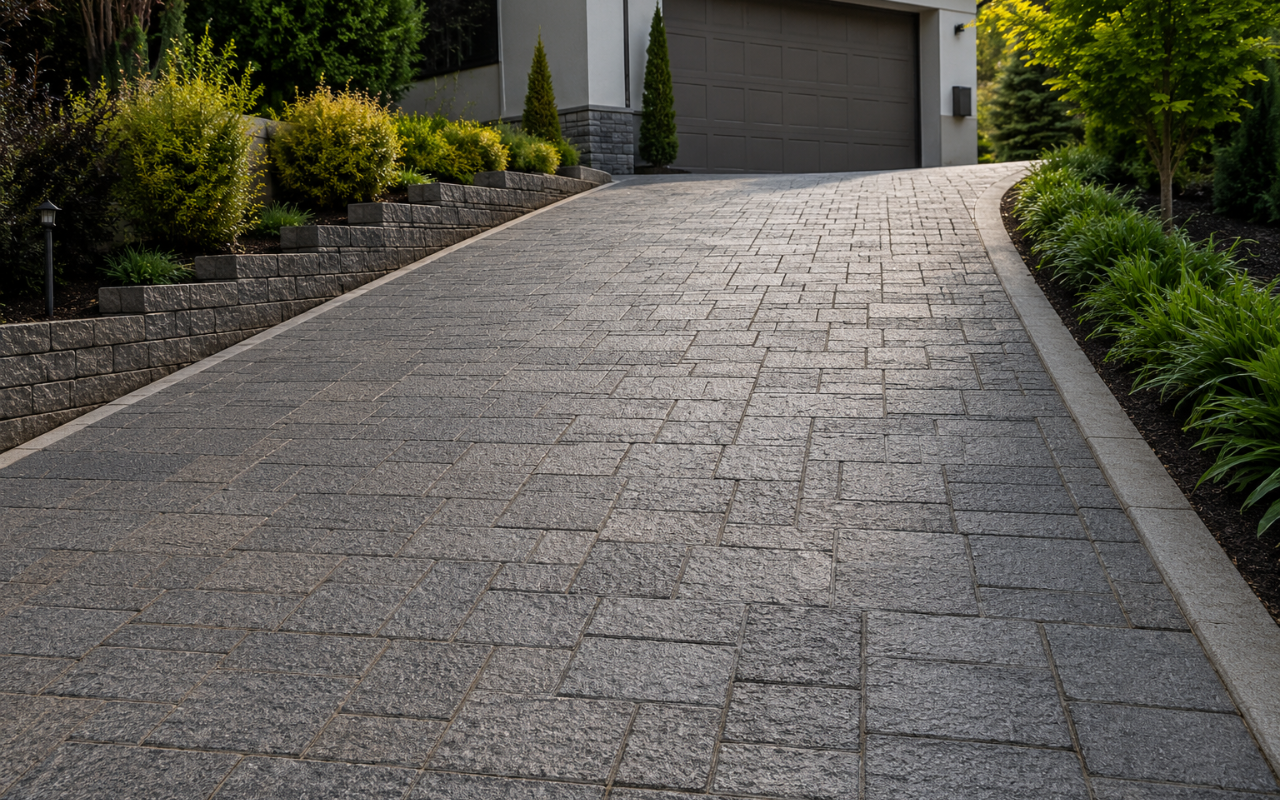
The best pavers for sloped driveways often have texture, tight joints, and strong edges. Concrete pavers are a common choice because they come in many shapes and are built for vehicle traffic.
Natural stone can also work well when the surface has enough grip. However, smooth materials may feel unsafe when wet, so slip-resistant paver surfaces should be a key part of the decision.
Driveway Drainage Planning Protects Your Surface And Landscape
Good driveway drainage planning helps stop water from washing out the base or pooling near your garage. Therefore, the slope, edges, and lowest points should be studied before installation starts.
When customers contact Moran’s Landscaping & Excavation LLC, we explain how water should move across and away from the driveway. For related local support, you can review our Bainbridge Island paver installation guidance.
- Channel drains can collect water at low points.
- Permeable pavers may help water soak into the ground.
- Gravel borders can support natural drainage.
- Proper grading moves water away from the home.
Design Details That Make Steep Entrances Feel Welcoming
A sloped driveway should be strong, but it should also match the home. Borders, mixed paver sizes, and balanced colors can make the incline feel more finished.
For example, a herringbone pattern may add strength and movement. In addition, nearby lighting, walls, or planting areas can soften the space and make the entrance feel warmer.
Project Estimates Help You Plan With Fewer Surprises
A clear paver installation estimate should include pavers, base stone, sand, drainage parts, edging, and labor. Since slopes need extra care, the estimate should also reflect grading and compaction needs.
With Moran’s Landscaping & Excavation LLC, you can discuss your driveway size, slope, and goals before work begins. To start a clear conversation, stop by our contact page for project planning.
- Measure the full driveway area carefully.
- Add extra material for cuts and edges.
- Include drainage items in the project scope.
- Ask how slope conditions affect the work.
Best Paver Options For Local Driveway Conditions
The best pavers for sloped driveways depend on soil, rain, shade, and how often the driveway is used. As a result, local experience can make the choice much easier.
Homeowners can compare nearby service pages, including Gig Harbor paver installation services and Poulsbo paver installation options. These pages can help you see how careful planning supports long-lasting outdoor surfaces.
Frequently Asked Questions
What are the best pavers for sloped driveways?
The best pavers for sloped driveways usually have strong edges, tight joints, and textured surfaces. Concrete pavers, some natural stone pavers, and permeable pavers can all work when the base and drainage are planned well.
Why does the base matter on a slope?
The base carries the weight of cars and keeps the surface even. Without a compacted base, pavers can shift, sink, or separate over time.
How can drainage improve a sloped driveway?
Drainage guides water away before it damages the base or gathers at the bottom. Channel drains, correct grading, and permeable surfaces can all support better water control.
Are textured pavers better for steep driveways?
Textured pavers often give better grip for tires and foot traffic. This matters more on steep areas, especially during rain or cold weather.
Should I compare pavers with other stone options?
Yes, comparing materials can help you choose the right look and function. Our guide on flagstone and pavers for outdoor spaces can help you understand key differences.
Build A Safer Sloped Driveway With Confidence
The best pavers for sloped driveways combine grip, strength, drainage, and design. When these parts work together, the driveway feels safer and looks better from the street.
At Moran’s Landscaping & Excavation LLC, we help you think through the details before installation begins. With the right plan, your sloped driveway can become a reliable entrance that supports your home every day.