
- Wed, Sep 2026
- |
- Moran’s Landscaping & Excavation LLC
Healthy shrubs need steady moisture, but common watering methods can waste water before it reaches the roots. With drip irrigation for shrubs, we direct water where plants need it most, helping reduce runoff, surface loss, and unnecessary watering across the yard.
At Moran’s Landscaping & Excavation LLC, we focus on simple irrigation choices that support strong plants and practical water use. A well-planned system can improve shrub root-zone watering, support low-water landscape irrigation, and make daily garden care easier.
Why Drip Irrigation Supports Healthier Shrub Growth Today
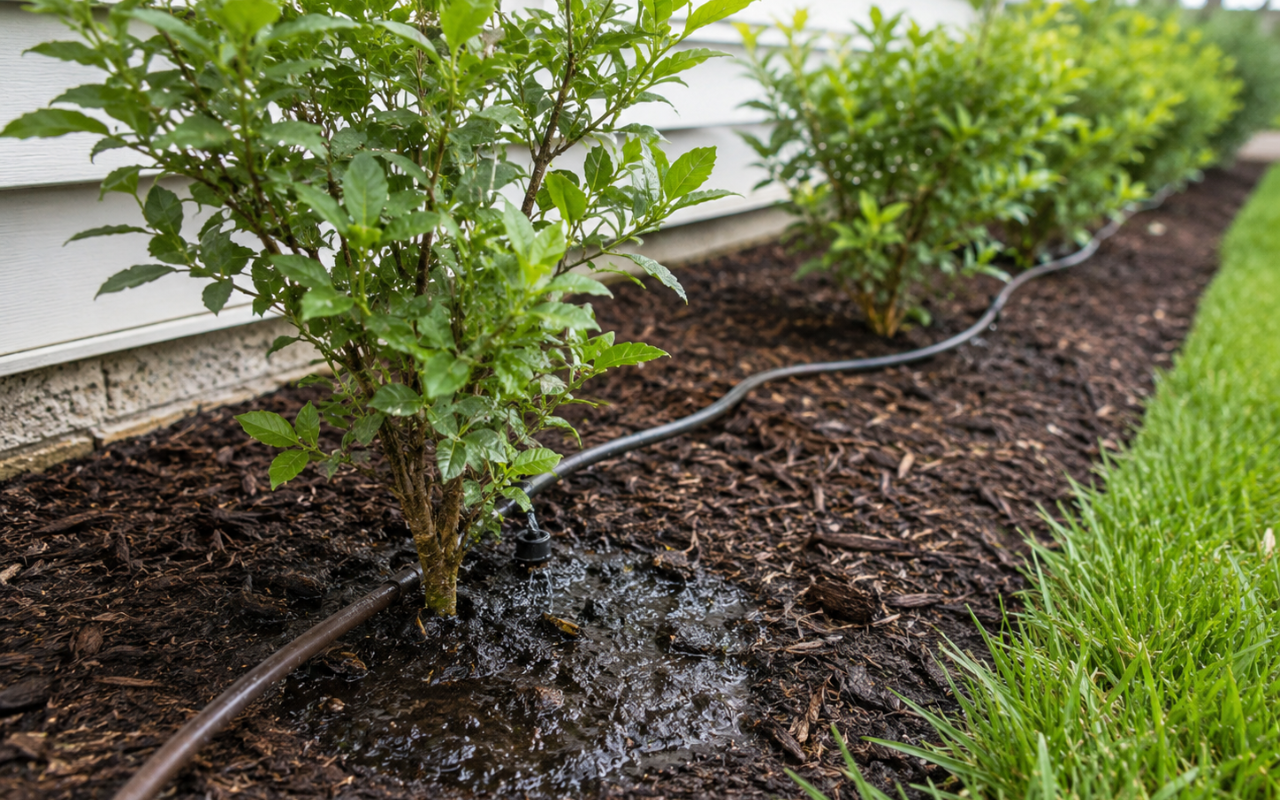
Drip irrigation releases water slowly near the soil, so roots can absorb moisture with less waste. This steady flow can reduce runoff on slopes and limit water loss during warm weather. It also keeps leaves drier, which may lower the chance of some moisture-related plant problems.
Because drip irrigation for shrubs targets the active root area, plants can develop stronger roots over time. Consistent watering also helps shrubs handle dry periods better and gives homeowners more control over how much water each planting zone receives.
Place Emitters Where Shrub Roots Need Water Most
Good emitter placement starts around the shrub’s active root area, not directly against the trunk. As the plant grows, emitters may need to move outward so water continues reaching newer feeder roots. This supports balanced shrub root-zone watering and avoids creating one overly wet spot.
Use these simple emitter spacing tips:
- Place emitters evenly around each shrub.
- Keep water away from the main stem.
- Adjust spacing as shrubs become wider.
Select A Drip System That Fits Your Landscape
The right setup depends on yard size, soil, water pressure, and the number of shrubs in each zone. Smaller beds may need a simple line with a few emitters, while larger landscapes may need separate watering zones for better control.
For a clearer comparison, review our guide to common irrigation systems. At Moran’s Landscaping & Excavation LLC, we can also help plan drip irrigation for shrubs around the layout and watering needs of your property.
Match Watering Time To Soil And Shrub Needs
Water needs change with plant type, weather, soil, and season. Sandy soil drains faster, while clay holds moisture longer. Checking the soil before each watering cycle helps prevent both dry roots and overwatering.
A practical routine includes:
- Group shrubs with similar water needs.
- Check soil moisture several inches deep.
- Adjust run times during hotter or cooler months.
- Watch for pooling, runoff, or dry spots.
For more guidance, see our garden irrigation planning tips for simple ways to manage watering across changing seasons.
Keep Your Drip System Clean And Reliable Longer
Regular care helps drip irrigation for shrubs stay dependable. Filters, tubing, fittings, and emitters should be checked often for leaks, dirt, or changes in flow. Flushing lines can clear small particles before they create larger problems.
At Moran’s Landscaping & Excavation LLC, we recommend watching for weak flow, loose connectors, and cracked tubing. For useful system comparisons, our drip and sprinkler comparison explains how each method handles water differently.
Solve Common Watering Problems Before Your Plants Suffer
Dry spots, uneven growth, and soggy soil can point to system problems. Clogged emitters, poor pressure, damaged tubing, or wrong placement may stop water from reaching the full root area. Small corrections often restore steady coverage quickly.
When checking a problem:
- Inspect emitters for dirt or blockage.
- Check fittings for leaks.
- Confirm each zone has steady pressure.
- Move emitters if roots have spread outward.
A professional drip irrigation installation service can also help when the system needs major changes or repeated repairs.
Frequently Asked Questions
How often should shrubs receive drip irrigation?
Watering frequency depends on plant type, soil, season, and weather. Deep, less frequent watering is often better than short daily cycles because it encourages roots to grow deeper.
Where should emitters sit around a shrub?
Place emitters around the active root area and move them outward as the shrub grows. Avoid placing all water directly beside the trunk.
Can a drip system reduce water waste?
Yes. A targeted drip system sends water close to the soil and roots, which can reduce evaporation, overspray, and runoff compared with less focused watering methods.
Does soil type change emitter spacing?
Yes. Clay spreads water more slowly and widely, while sandy soil drains faster. Spacing should match how moisture moves through your soil.
When should I call an irrigation professional?
Professional support is useful for pressure problems, zoning changes, recurring leaks, or full system planning. Our irrigation planning team can review your needs.
Build A Smarter Watering Plan For Healthy Shrubs
A thoughtful low-water landscape irrigation plan combines correct placement, suitable run times, regular checks, and plant grouping. Mulch can also help soil hold moisture longer, while early morning watering can reduce water loss during warmer days.
With Moran’s Landscaping & Excavation LLC, you can plan drip irrigation for shrubs around your property’s real conditions instead of using a one-size-fits-all approach. If your yard also includes lawn areas, our sprinkler installation information may help you plan separate zones more effectively.