
- Wed, Aug 2026
- |
- Moran’s Landscaping & Excavation LLC
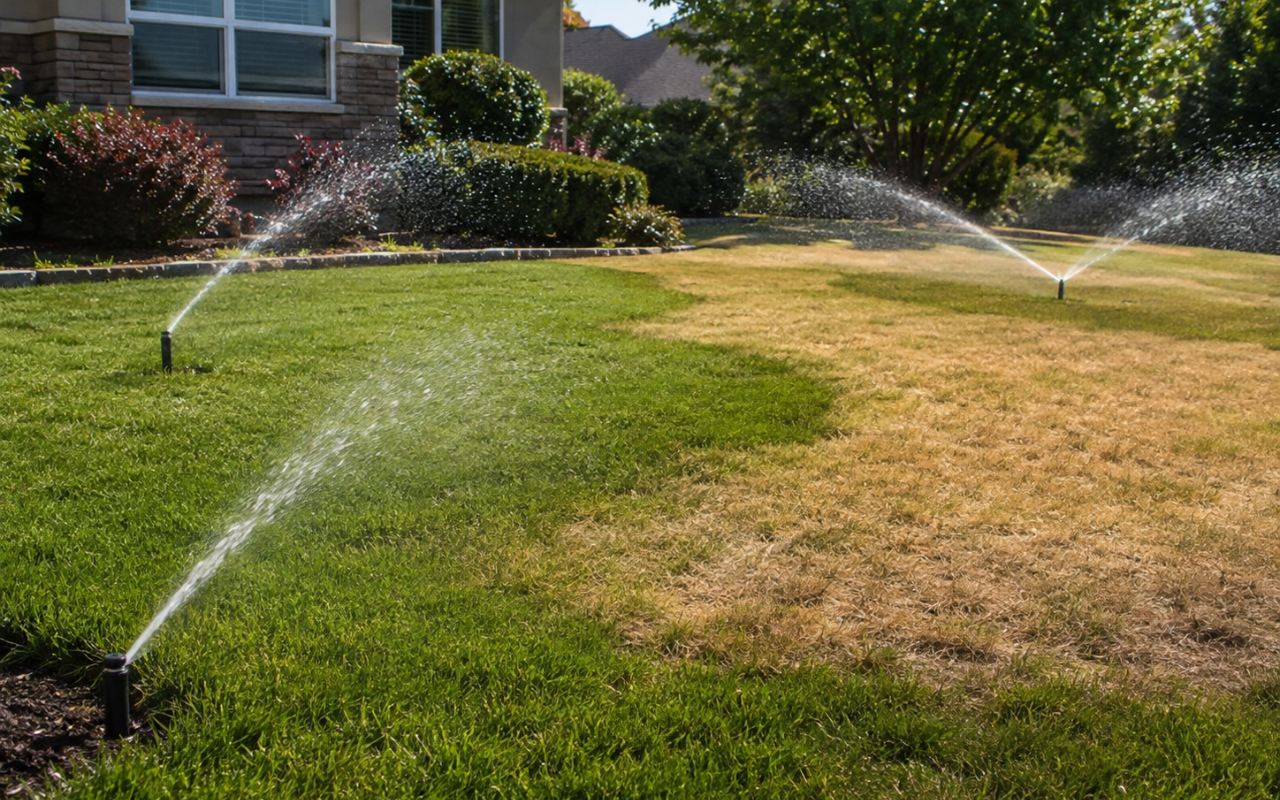
Sprinkler head coverage problems often cause green patches beside dry, weak grass. At Moran’s Landscaping & Excavation LLC, we look for simple causes first, such as blocked nozzles, poor angles, or low water flow.
Small changes can improve uneven lawn watering and protect your yard. With the right checks, you can reduce waste, limit dry areas, and help every part of the lawn receive steady moisture.
Spot Early Signs Of Uneven Lawn Watering
Begin by watching one full watering cycle. Look for mist, weak spray, water on hard surfaces, or heads that do not rise. These signs often reveal sprinkler head coverage problems before serious lawn stress appears.
Mark dry spots in irrigation zones with small flags. Compare each dry area with the nearest head. This shows whether the spray falls short, points the wrong way, or is blocked by tall grass.
- Check for puddles beside dry grass.
- Watch for spray hitting fences or driveways.
- Note heads with weak or uneven flow.
Adjust Spray Arcs For More Even Coverage
A careful sprinkler arc adjustment can close small gaps between spray patterns. Turn the system on, then adjust one head at a time. Make small changes and test again, because wide changes can create new wet or dry areas.
Most heads use a small top screw to control distance or direction. Our guide to common sprinkler head types can help you understand how different models work before you make changes.
Check Water Pressure Before Replacing Any Parts
Low pressure may keep water from reaching the edge of a zone. High pressure can create mist that blows away. Both issues can lead to sprinkler head coverage problems, even when the heads are clean and correctly aimed.
Run each zone and compare spray strength. If several heads look weak, the issue may be in the valve, supply line, or zone design. A sudden drop can also point to a hidden leak.
- Look for weak streams across one zone.
- Check for soggy ground near buried lines.
- Listen for water movement after shutdown.
Clean Clogged Nozzles And Raise Low Heads
Dirt, grass, and mineral buildup can block part of the spray. Turn off the system, remove the nozzle, and rinse it with clean water. Avoid using sharp tools that may damage the opening or change the spray shape.
A head that sits too low may be covered by turf. If the unit does not rise, review our advice for a sprinkler head that will not pop up. Raising or clearing it can quickly improve coverage.
Choose Better Heads For Difficult Lawn Areas
Some lawn shapes need a different head style. Narrow strips, corners, slopes, and large open spaces do not all need the same spray pattern. The right design can reduce uneven lawn watering and limit water on paths or walls.
Compare options in our guide to choosing the right sprinkler. At Moran’s Landscaping & Excavation LLC, we match head type, range, and water flow to the shape of each area.
- Use short-range sprays for small spaces.
- Utilize rotors for wider lawn sections.
- Keep matching heads within each zone.
Balance Watering Times Across Every Irrigation Zone
Longer watering does not always solve dry spots in irrigation zones. If one area receives poor spray, extra runtime may flood other sections. Fix the coverage first, then adjust the schedule in small steps.
Sun, shade, slope, and soil all affect water needs. Early morning cycles often reduce wind loss. For larger system changes, our sprinkler installation planning page explains how thoughtful zone design supports steady results.
Frequently Asked Questions
Why Does One Lawn Area Stay Dry?
A blocked nozzle, poor angle, low pressure, or wrong head type may be the cause. Check the nearest heads during a live cycle and confirm that their spray patterns overlap.
Can Arc Changes Fix Most Coverage Gaps?
A sprinkler arc adjustment can fix many small gaps. However, it will not correct low pressure, leaks, blocked nozzles, or a head that is placed too far away.
Should Every Head Use The Same Nozzle?
Not always. Each zone should use heads with similar flow needs, but the nozzle shape may change based on corners, narrow strips, or open lawn areas.
How Often Should Sprinkler Heads Be Checked?
Inspect them monthly during the watering season. Also check after mowing, yard work, freezing weather, or any sudden change in lawn color.
When Is Professional Repair The Best Choice?
Call for a sprinkler repair service when pressure stays low, leaks are underground, valves fail, or repeated adjustments do not improve the spray.
Restore Reliable Coverage With Skilled Local Support
Regular checks can prevent sprinkler head coverage problems from harming your lawn. Still, some systems need deeper repairs, better head placement, or zone changes. Our team can inspect the full setup and explain the clearest next step.
With Moran’s Landscaping & Excavation LLC, you receive practical guidance for your yard. Use our contact page to request help with sprinkler head coverage problems and build more dependable watering across your lawn.