
- Wed, Mar 2026
- |
- Moran's Landscaping & Excavation LLC
Retaining wall footing in wet soils in Kitsap can be simple with the right steps. Moran’s Landscaping & Excavation LLC helps property owners build safe walls that last in damp ground.
In this guide, you will learn about footing depth, sub-base, geotextile, and behind-wall drainage. As a result, you can avoid erosion, standing water, and weak support.
Pick the Best Spot Before You Start the Footing Work
A good location gives your wall a better chance to stay strong for years. First, look at how water moves across the yard after rain. Then avoid low spots where water sits for a long time. Moran’s Landscaping & Excavation LLC always checks slope, runoff, and nearby roots before work begins.
- Choose a place with easy water runoff.
- Avoid the base of steep slopes.
- Keep space away from large tree roots.
- Check local rules near lines and utilities.
Also, make sure you can see the area easily after the wall is built. This helps you spot wet spots early. In many cases, smart placement prevents future drainage trouble and wall movement.
Check Soil and Drainage Before Building the Base Area
Before you dig the full trench, test the soil. Dig a small hole and watch how long water stays there. If water remains after 24 hours, the site likely has poor drainage. Because of that, you may need a better sub-base and a stronger drainage path.
Sandy soil drains fast, but it can shift. Clay soil holds water and swells. Loam is often easier to work with, yet it still needs grading. Moran’s Landscaping & Excavation LLC studies these details so each wall starts on a safer base.
Use Strong Materials That Handle Wet Kitsap Ground Well
The right materials matter in wet areas. Concrete blocks and reinforced concrete often work well because they stay strong in moisture. Natural stone can also look great when it sits on a solid core. However, light materials may move when the soil gets too wet.
- Use washed gravel for the sub-base.
- Pick sharp-edged rock that locks in place.
- Choose durable wall units for wet ground.
- Avoid weak materials that break down in water.
A solid sub-base helps water move below the wall instead of building pressure behind it. If you want to compare design options, read different types of retaining walls. That page can help you match style and function.
Install Geotextile and Behind-Wall Drainage the Right Way
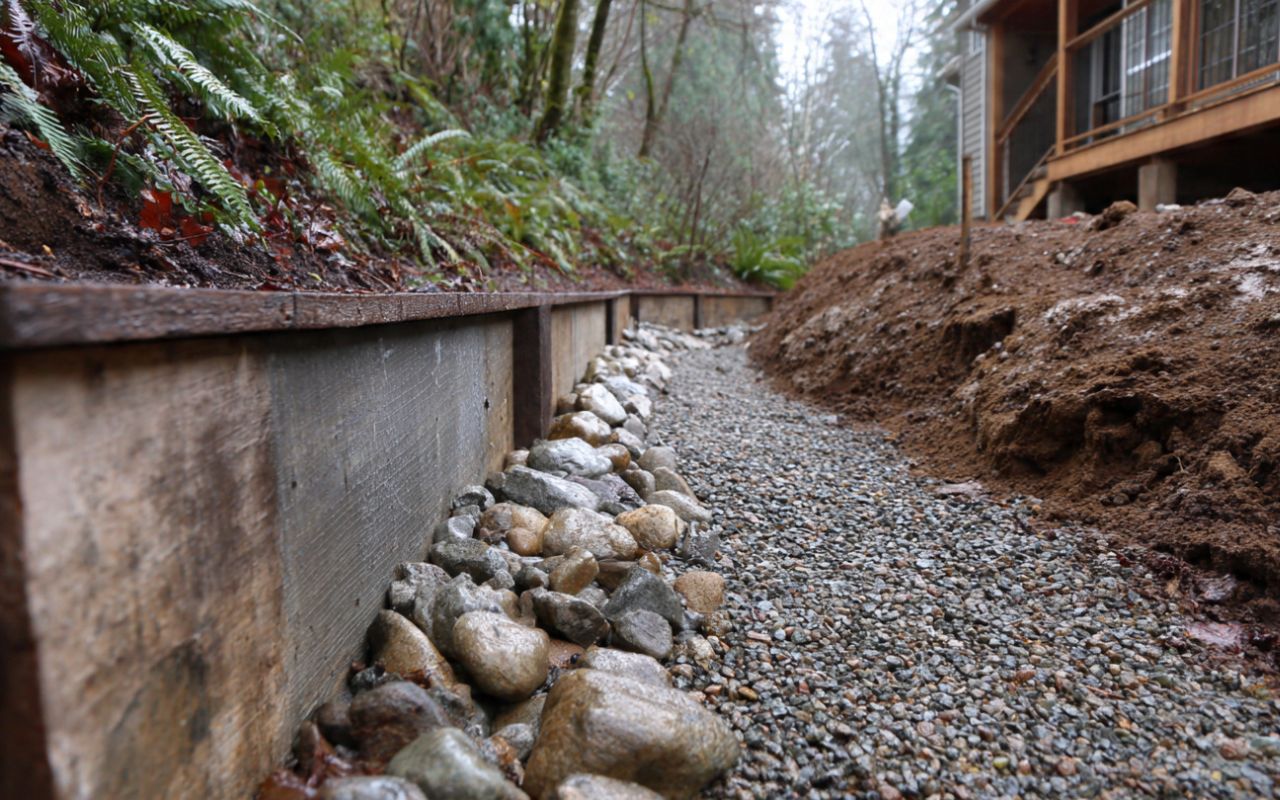
Retaining wall footing in wet soils in Kitsap needs water control from the start. Geotextile helps keep fine soil out of the gravel while still letting water pass. This simple layer protects the sub-base and helps the drainage system keep working.
Place the geotextile behind the wall and over the backfill zone. Overlap each seam by at least 12 inches. Then add a perforated pipe behind the lowest part of the wall. After that, cover the pipe with washed gravel so water can move out with less risk of clogs.
The behind-wall drainage pipe should slope away from the wall. That small slope helps water leave the area instead of staying near the footing. In wet ground, this step is one of the most important parts of the whole job.
Build a Stable Footing With Proper Depth and Compaction
Retaining wall footing in wet soils in Kitsap must sit on a level and compact base. First, dig below the frost line, which is often 12 to 18 inches in this area. Next, make sure the trench bottom is even. If it is uneven, the wall may crack or lean later.
After digging, add 4 to 6 inches of compacted gravel. This sub-base improves drainage and supports the footing. Use a plate compactor or hand tamper to press the gravel firmly. Good compaction lowers the risk of settling, which is a common problem in wet sites.
- Dig to the right depth for the site.
- Keep the trench floor level.
- Add and compact gravel in thin layers.
- Recheck width and depth before pouring concrete.
If you pour concrete, do it in one steady step when possible. This helps reduce weak joints. Then smooth the top well so the next wall layer starts flat and secure.
Frequently Asked Questions About Wet Soil Retaining Wall Footings
Why is drainage so important behind a retaining wall?
Drainage lowers water pressure behind the wall. Without it, water can push hard on the structure and make it bow, crack, or fail over time.
What does geotextile do in a wet soil wall system?
Geotextile separates soil from gravel. At the same time, it lets water pass through. Because of that, it helps keep the drainage stone and pipe from clogging.
How thick should the sub-base be under the footing?
Many projects use 4 to 6 inches of compacted gravel. Still, the final depth can change based on wall size, soil type, and site conditions.
Can a retaining wall be built near trees?
Yes, but it should not sit too close to large roots. Roots can move soil and put stress on the footing and wall over time.
When should I call a professional for help?
You should call a pro when the ground stays very wet, the wall is tall, or drainage is hard to manage. Moran’s Landscaping & Excavation LLC can inspect the site and suggest a safe plan.
Fix Common Wet Soil Problems Before They Get Worse
Even good projects can face trouble later. Retaining wall footing in wet soils in Kitsap may show signs of stress if water builds up or if the base was not compacted well. For example, a wall may bulge, sink, or crack in small areas.
If the wall bows outward, check the behind-wall drainage first. If water cannot escape, pressure grows fast. If one area sinks, the sub-base may need more compacted gravel. Small cracks can sometimes be sealed, but large gaps may need bigger repair work.
Early checks help you avoid bigger costs later. So, inspect the wall after heavy rain and during each season. Clear drain outlets, remove debris, and keep an eye on any movement.
Keep Your Retaining Wall Strong With Simple Care Steps
Retaining wall footing in wet soils in Kitsap will last longer with steady care. After the footing cures, inspect the wall from time to time. Clear drain openings, trim nearby plants, and watch for standing water. These simple steps can protect the wall for many years.
Moran’s Landscaping & Excavation LLC knows that careful planning, proper footing work, and a clean drainage system make a big difference. If you need local help, explore retaining wall services in Poulsbo, WA or retaining wall services in Bainbridge Island, WA. You can also reach the team through the contact page for Moran’s Landscaping & Excavation LLC for site-specific support.